Second Edition of “Halal Flavors” Takes Shape with Participation from Gastronomy Students
Project by the International Halal Academy, developed in partnership with Universidade Estácio, will feature date-based recipes created by Gastronomy students, with launch scheduled for December.
It all started with a date. Or, more precisely, with a conversation about its nutritional properties, its culinary possibilities, and its importance to Muslims.
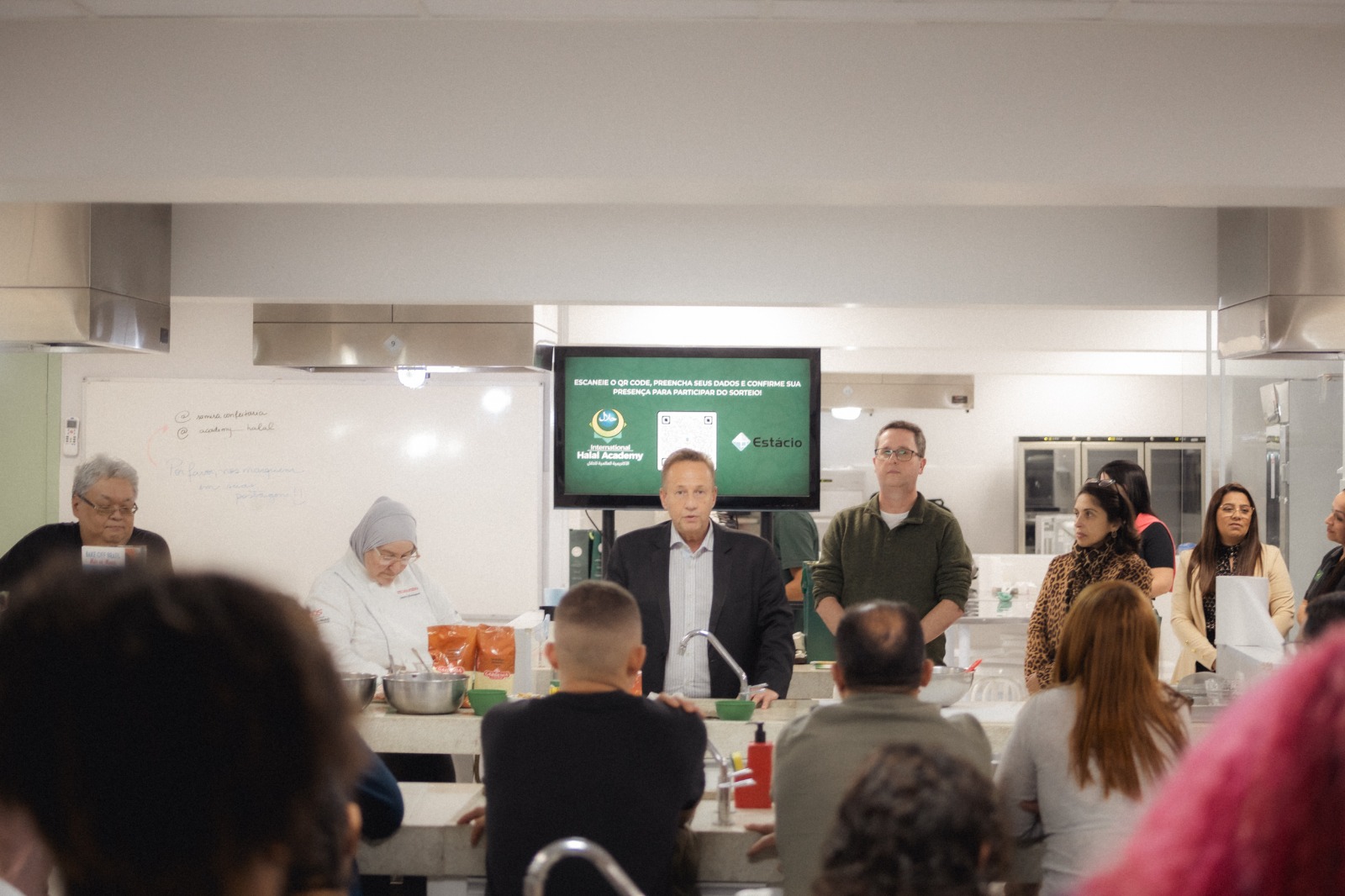
On June 3, Gastronomy students from Universidade Estácio’s Santo Amaro campus in São Paulo attended the lecture “Benefits of Dates and Their Religious Importance to Muslims,” organized by the International Halal Academy (IHA). What the students were just beginning to discover during that meeting was that the ingredient would become the central theme of a project spanning the entire semester: the production of the second edition of the book Halal Flavors – Recipes Celebrating Cultures, History, and Tradition.
The lecture was given by Barbara Domingos, a Chemical and Food Production Engineer and senior Quality Analyst at FAMBRAS Halal Certificadora, a strategic partner of IHA. During the event, she presented the nutritional properties of dates, their various uses, and the importance of the food in Islamic tradition.
The activity marked the beginning of a partnership between IHA and Universidade Estácio’s Gastronomy program for the production of the second edition of Halal Flavors, which will feature sweet and savory recipes using dates. After learning more about the ingredient, the students had the opportunity to see it used in practice in dishes prepared by Muslim chefs.
Getting Hands-On
Now in August, the industrial kitchen at Universidade Estácio’s Santo Amaro campus became the setting for the project’s second stage.
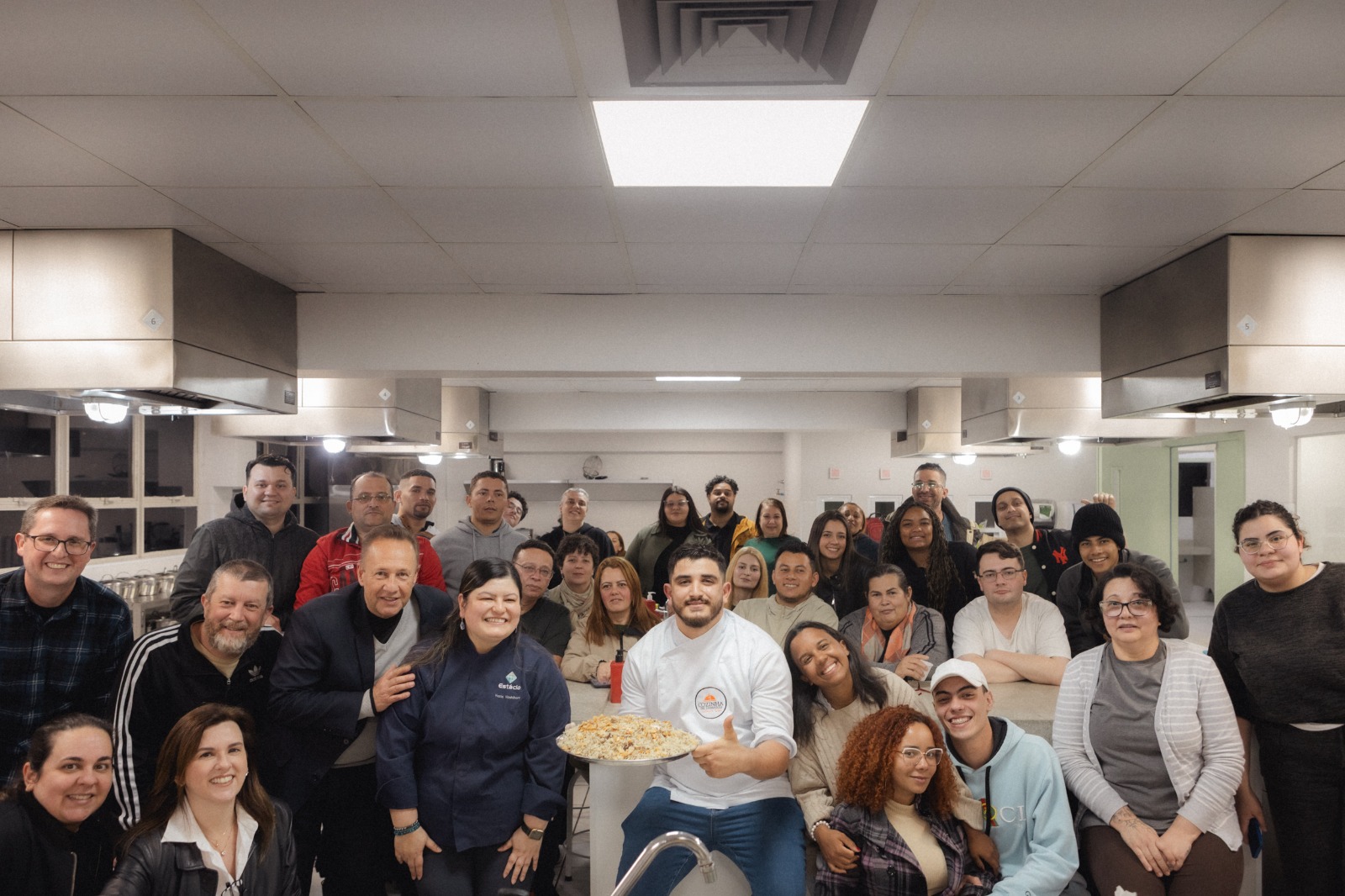
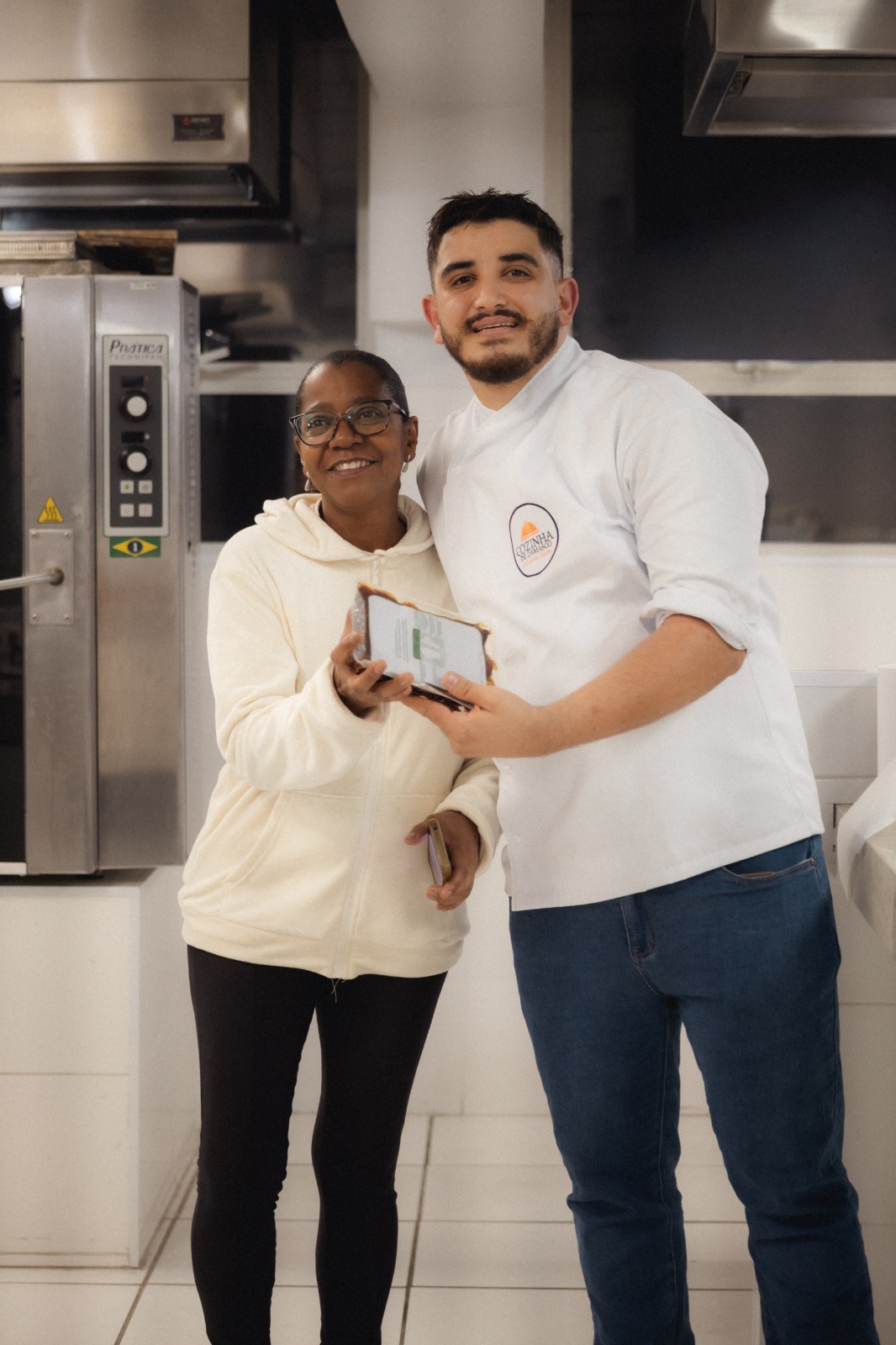
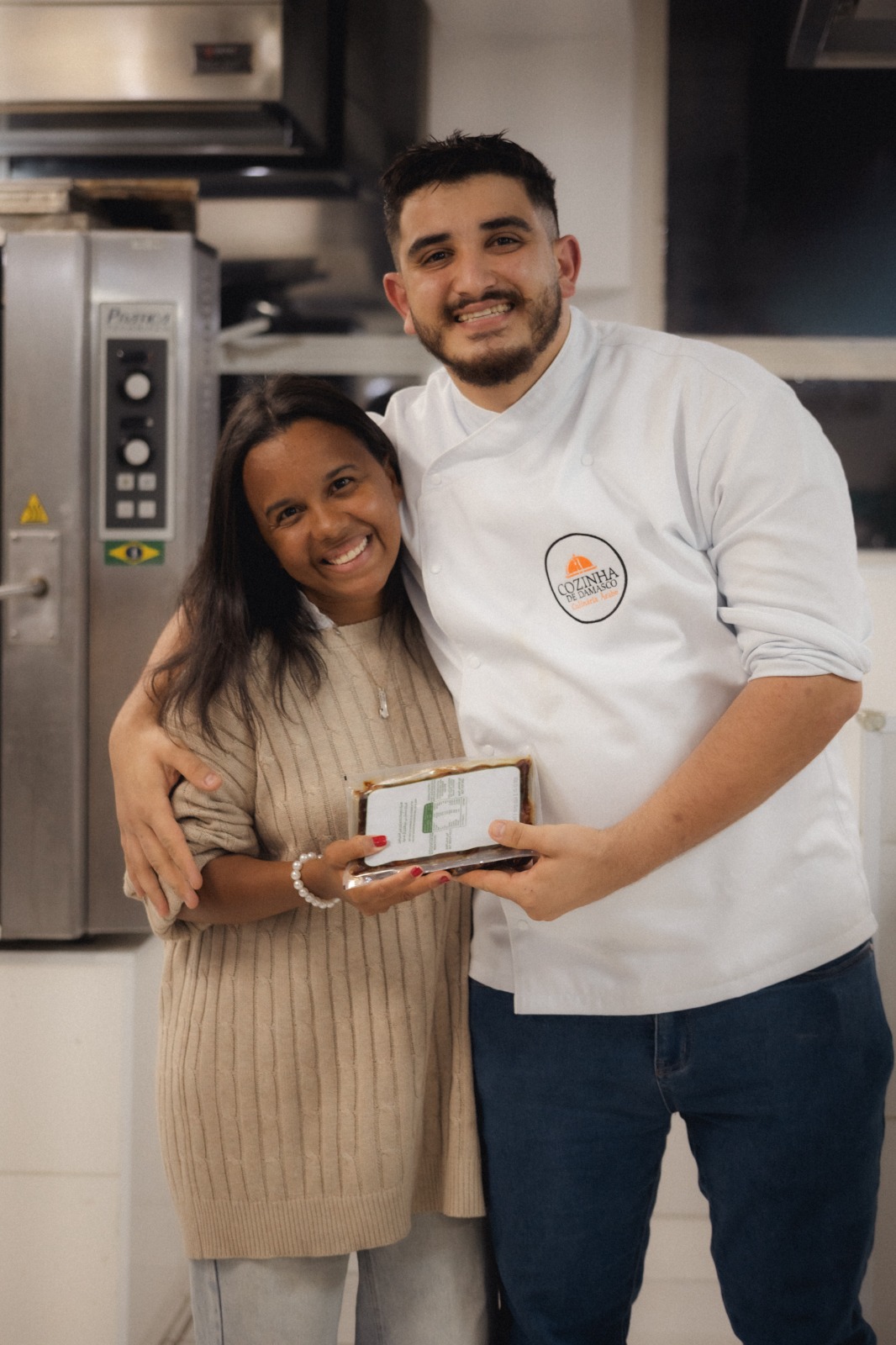
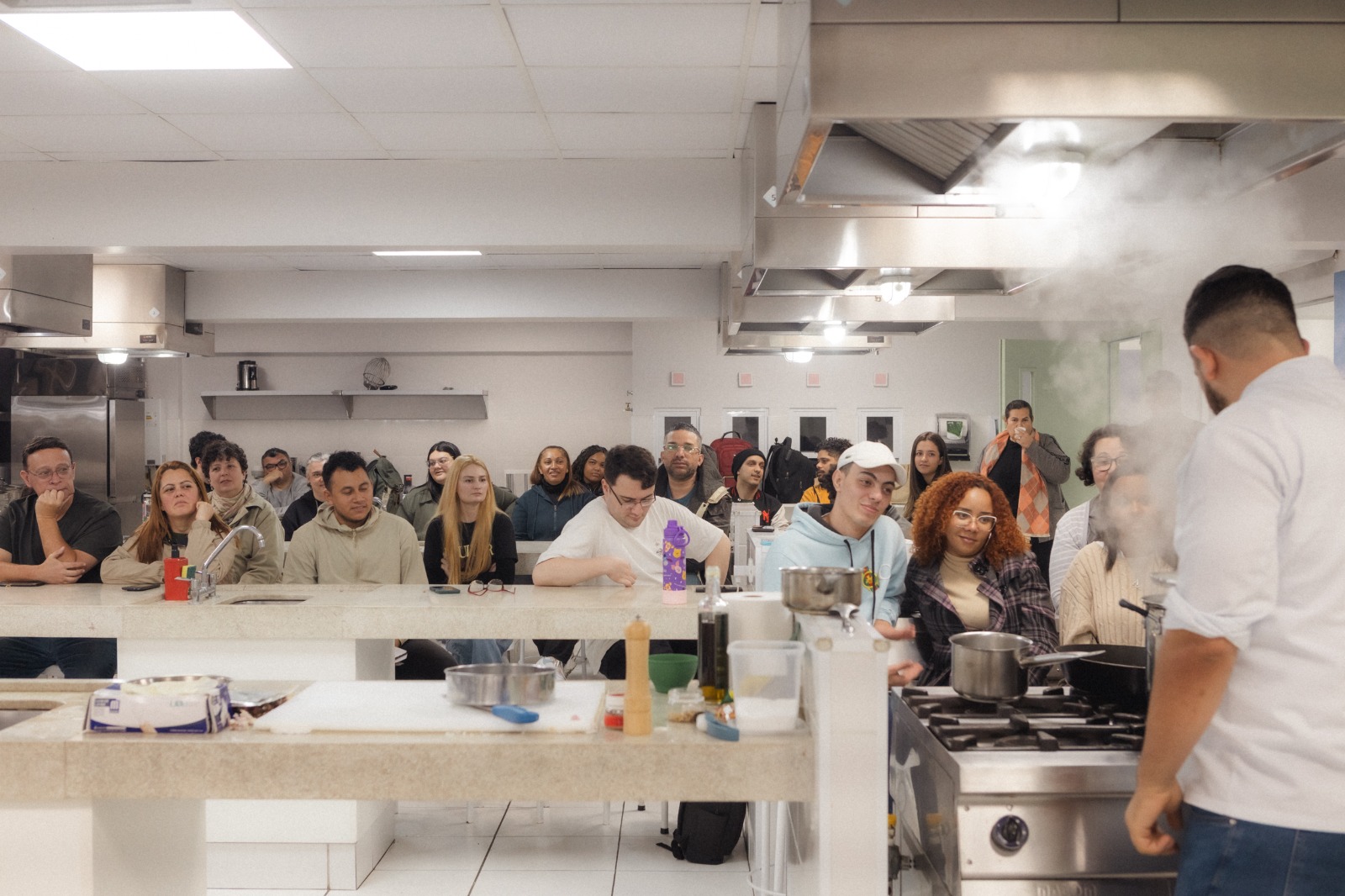
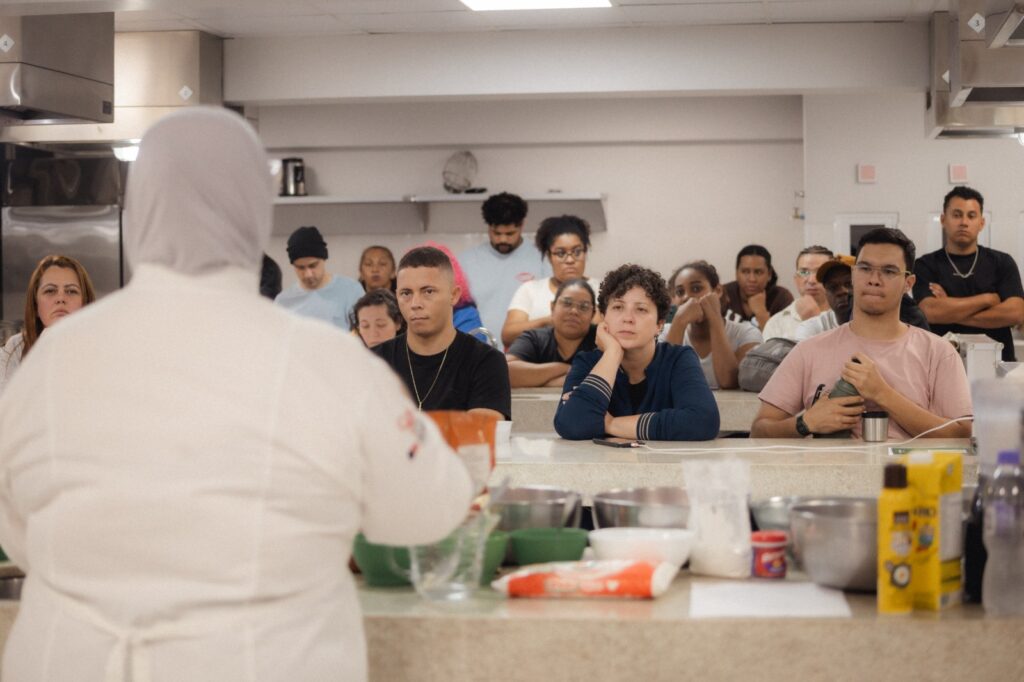
On August 11, Syrian chef Amin Badawi, from Cozinha de Damasco restaurant, led a workshop in which he prepared Moroccan rice with dates. In addition to following the different stages of the recipe, students learned about ways to combine the ingredient in a savory dish and exchanged experiences with the chef.
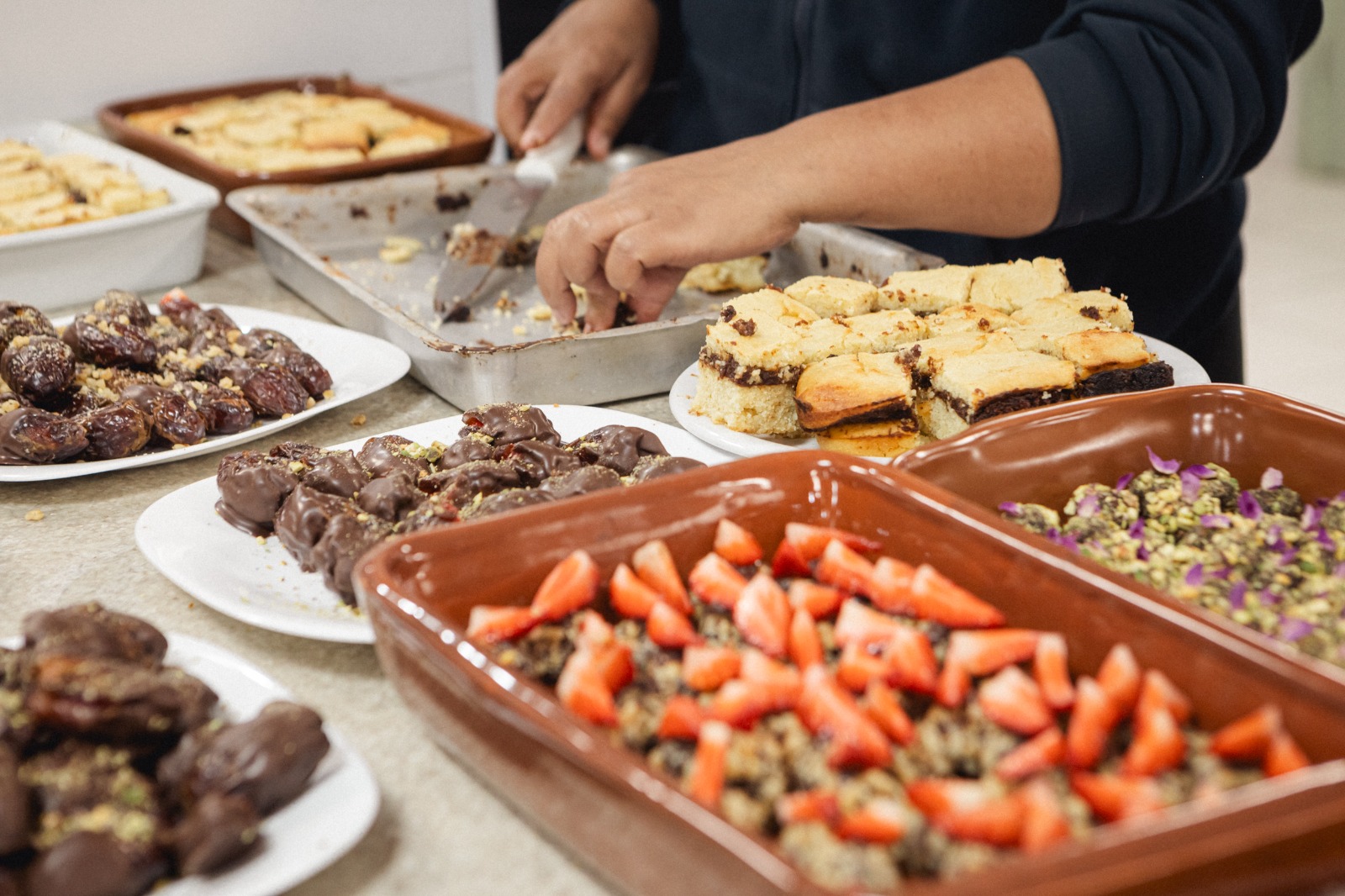
Two days later, on August 13, it was time for sweet recipes. The guest was Samira Ghannoun, the first winner of the Brazilian reality show Bake Off Brasil, in 2015, and the first Muslim woman to win a competition of this kind in the country.
In the university kitchen, Samira prepared three recipes: stuffed herice with dates; dates stuffed with strawberries and walnuts and covered in chocolate; and date and pistachio brigadeiro.
The students’ curiosity about the pastry chef’s career also made the meeting even more interactive. Some students were invited to literally get their hands into the dough and assist Samira with the preparations.
The two workshops had a goal that went beyond teaching new recipes. The proposal was to broaden the students’ culinary repertoire and demonstrate different ways of working with dates before they themselves took on the challenge of creating dishes that could become part of the new book.
Now It’s the Students’ Turn
With the workshop stage completed, the project is entering a new phase. Students will learn the rules of the culinary competition that will determine the recipes for the second edition of Halal Flavors.
The challenge will be to develop sweet or savory recipes featuring dates as one of the ingredients. During classes, students will be able to test combinations, refine techniques, and develop the dishes they will present to the judging panel.
The competition is scheduled for October. On the day of the competition, the dishes will be evaluated by three judges, with prizes awarded to the top three participants.
A total of 13 recipes will be selected for inclusion in the second edition of Halal Flavors, scheduled for release in December. Samira Ghannoun will write the foreword to the new publication.
From Social Media to the Second Book
The new edition continues a story that began rather informally. The first recipes were published on the International Halal Academy’s Instagram account and generated enough interest for the institution to decide to compile them into a publication.
Thus was born the first edition of Halal Flavors, launched in October 2025 during the second edition of the Halal Technical-Scientific Congress (CTec Halal), at World Trade Center Events in São Paulo.
The publication brought together 13 recipes from different culinary traditions: Chicken Kabsa, Maamoul, Kadaif, Tabbouleh, Malaysian Nasi Lemak, Lamb Biryani, Indonesian Rendang, Shawarma, Harira, Vegetable Curry, Moroccan Tagine, Pastilla, and Raw Kibbeh.
In addition to ingredients and preparation methods, the book presents the origins and interesting facts related to each dish. The proposal was to use gastronomy as a way of learning about different cultures and understanding values associated with Halal food, such as respect, sharing, and hospitality.
“Halal Flavors shows that talking about Halal food is also talking about culture, tradition, and values. Through gastronomy, we can present what is permitted for Muslim consumption in a very approachable and accessible way, while also showcasing the richness of flavors and stories that exist within this universe,” says Ali Zoghbi, Vice President of FAMBRAS Halal Certificadora and President of IHA. “The second edition expands this proposal by involving Gastronomy students, who will have the opportunity to learn about these concepts and transform them into new recipes.”
“We are very excited about this second edition because, this time, the book will also be the result of a process of creation and learning,” adds Delduque Martins, Executive Director and Secretary-General of the International Halal Academy. “This unprecedented partnership with Universidade Estácio has brought a new dimension to Halal Flavors and reinforces one of IHA’s missions: to promote knowledge about Halal in a practical way that can reach new audiences.”