FAMBRAS Strengthens Institutional Cooperation with UNHCR and the Ministry of Justice During Meetings in Brasília
Report presented by the Federation outlines progress on initiatives focused on the reception, training, and integration of migrants and refugees in Brazil.
The Federation of Muslim Associations of Brazil (FAMBRAS) held an important institutional agenda in Brasília on August 18, 2026, focused on strengthening cooperation in initiatives for the reception and integration of migrants and refugees in the country.
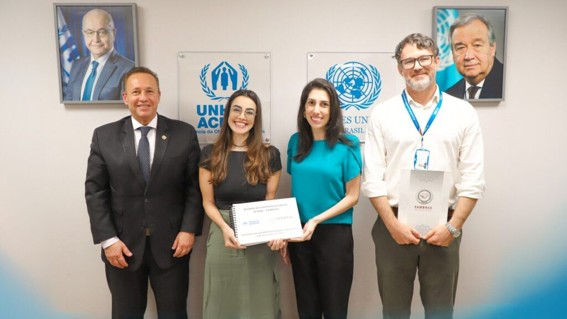
During the visit, FAMBRAS’s Director of Projects and Institutional Relations, Delduque O. Martins, presented the Progress Report on Actions and Projects – January to April 2026 to the United Nations High Commissioner for Refugees (UNHCR) and to the General Coordination Office of the National Committee for Refugees (CONARE), which is part of Brazil’s Ministry of Justice and Public Security (MJSP).
The presentation of the document is part of the Cooperation Agreements signed by FAMBRAS with UNHCR and MJSP and contributes to monitoring initiatives jointly carried out by the institutions.
The report covers the main actions and projects developed during the period, including professional training, employability, language support, and humanitarian assistance, as well as other initiatives aimed at expanding opportunities, promoting autonomy, and contributing to the integration of the populations served.
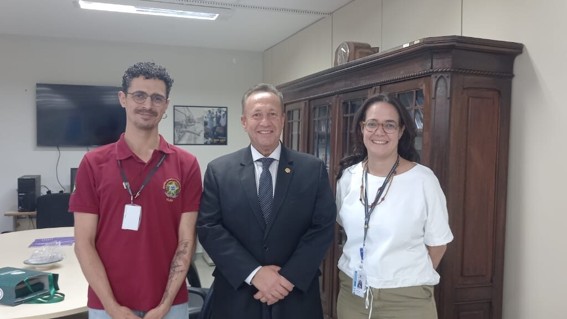
During the meetings in the federal capital, discussions were also held with UNHCR representatives Marília Cintra Corrêa, Iara Guimarães, and Pablo Mattos, as well as representatives of the General Coordination Office of CONARE/MJSP, Leonardo Lino and Melanie Grun.
The meetings enabled the institutions to monitor ongoing initiatives, exchange information, and strengthen dialogue for the continuation of actions benefiting migrants and refugees.
Through these partnerships, FAMBRAS reaffirms its commitment to humanitarian and social initiatives based on welcoming people, respecting human dignity, and creating opportunities. Cooperation with national and international institutions expands the capacity to develop actions that contribute to a more inclusive society and to the integration of people seeking to rebuild their lives in Brazil.