FAMBRAS Holds Solidarity Iftar at Boracea Unit, Serving More Than 1,500 People Experiencing Homelessness
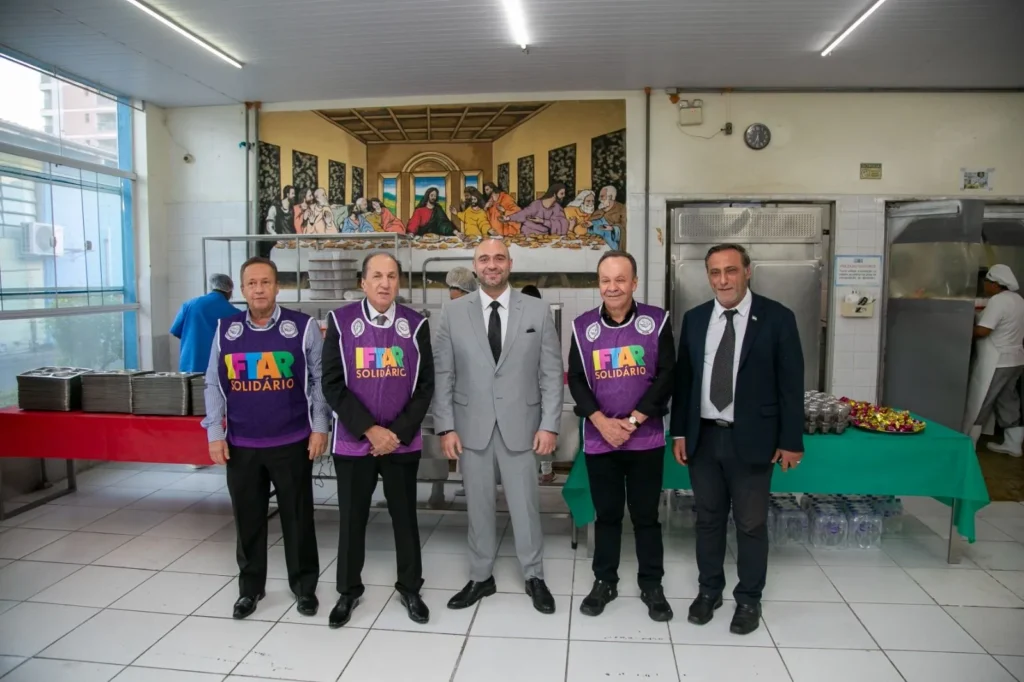
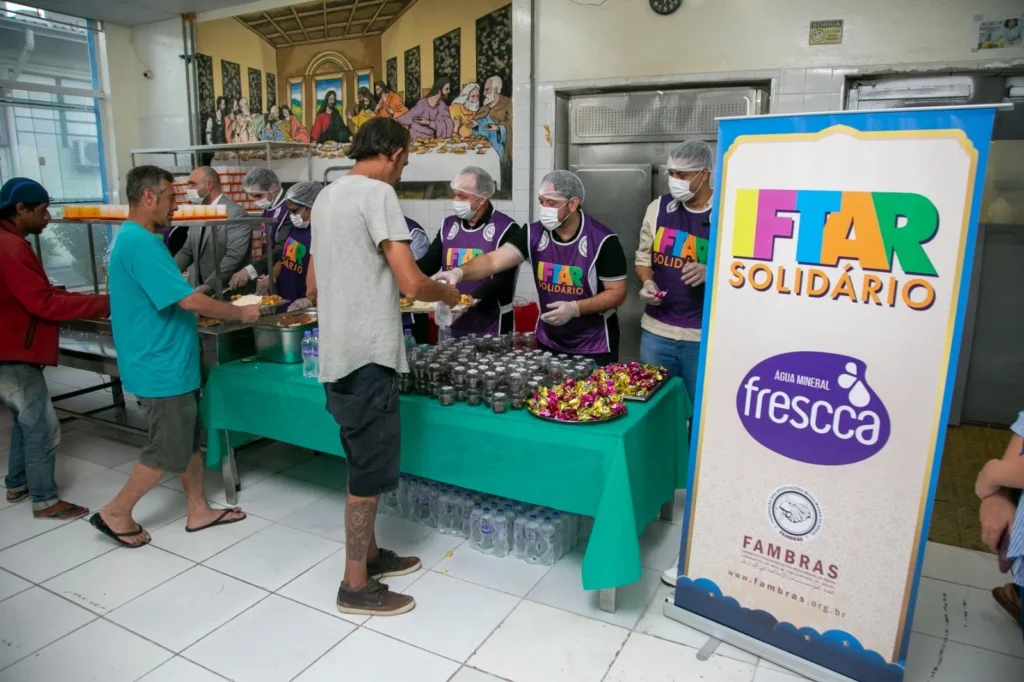
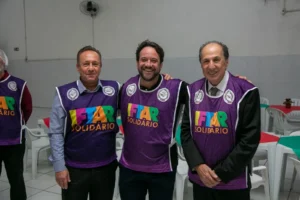
On Tuesday evening (03/03), the Federation of Muslim Associations of Brazil (FAMBRAS) held another edition of its Solidarity Iftar at the Boracea Unit, providing food and a welcoming environment for more than 1,500 people experiencing homelessness.
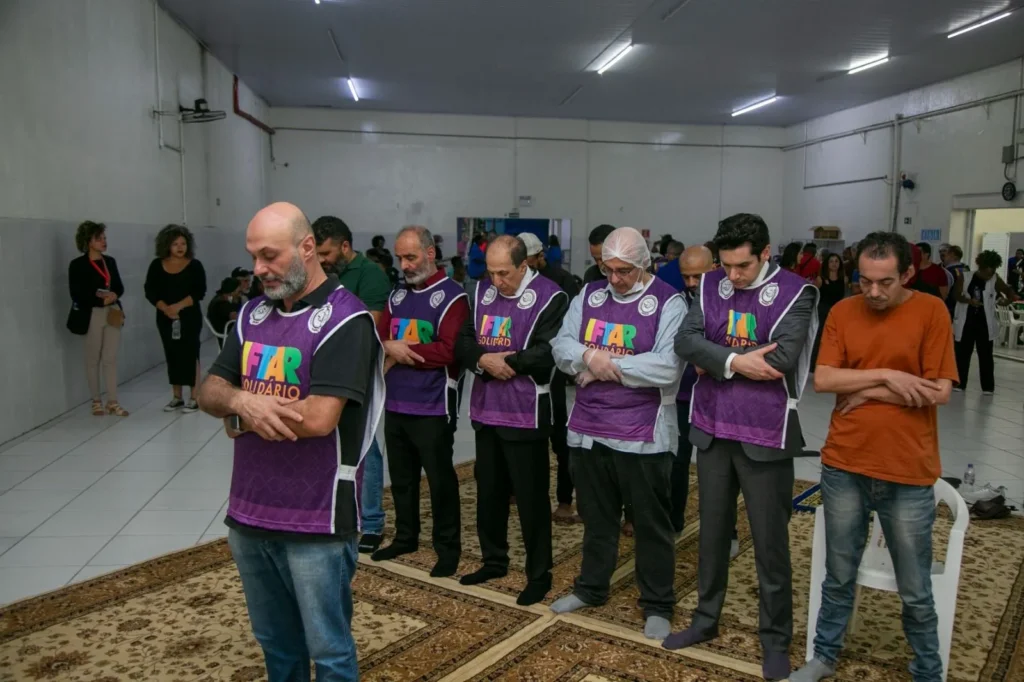
The initiative is part of the social actions promoted by the institution during the Holy Month of Ramadan, a period of spiritual reflection, solidarity, and strengthening of community bonds.
According to FAMBRAS President Ali Hussein El Zoghbi, the initiative represents the Muslim community’s ongoing commitment to charity:
“We always pray that God accepts our intentions. This is our mission. Doing good and practicing charity at all times is a legacy of our religion. For Muslims, this is part of our daily lives and completes us as human beings and as an institution. We hope that this action will be the beginning of a chain of goodness, so that we may always extend a helping hand to others.”
Held annually by FAMBRAS in partnership with FAMBRAS Partners and the sponsors of the 2026 Solidarity Iftar — Korin, Água Frescca, and Milhão Solidária — at the Boracea Unit, the Solidarity Iftar aims to provide food, welcome, and care to people experiencing vulnerability.
In Islam, charity is one of the five pillars of the religion, and Iftar, the meal that marks the breaking of the daily fast during Ramadan, symbolizes a moment of sharing and brotherhood. By organizing the Solidarity Iftar, FAMBRAS extends this spirit of solidarity beyond the Muslim community, reaching those who are most in need.
According to Davi de Souza, president of Apoio, the organization that partnered in the initiative, the event has a direct impact on the lives of those served:
“We served more than 1,500 meals, and participating in such an important moment for the Muslim community is also very meaningful for us and for the people we serve. We hope to maintain this partnership with FAMBRAS for many years.”
The Boracea Complex is one of the main public facilities providing support to people experiencing homelessness in the city of São Paulo. Managed by the city government, the facility operates as a social assistance center offering temporary shelter, food, psychosocial support, healthcare services, and referrals to social and professional reintegration programs. By bringing different support structures together in one location, the complex seeks to respond to the immediate needs of vulnerable people while promoting the rebuilding of social ties and autonomy.
According to FAMBRAS volunteer and Technical and Religious Quality Manager Soha Chabrawi, the inspiration for the initiative comes directly from the teachings of the Prophet Muhammad (PBUH):
“The Prophet Muhammad was the most generous person and, during the month of Ramadan, he became even more generous. Participating in the Solidarity Iftar means putting this teaching into practice: always being more generous and compassionate. Islam teaches us that during Ramadan, we should not only abstain from food, drink, and bad deeds, but also help others, especially those who need it most.”
For FAMBRAS, initiatives such as this put the Islamic principles of solidarity and assistance to those in need into practice. As the Prophet Muhammad (PBUH) taught: “O people, spread peace, feed the hungry, and maintain family ties.”
(Hadith narrated by Al-Tirmidhi)
For João, a beneficiary of the Iftar and resident of the Boracea Unit, participating in such an event for the first time was a meaningful experience:
“It was very interesting. I didn’t know about Islamic culture,” he said. For him, more than the meal itself, the welcoming gesture was what touched him most:
“It was something very meaningful to me. I get very emotional because those of us who live here know how difficult it is to receive loving people who embrace us and treat us as human beings — which is what we are.”
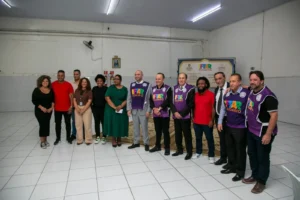
Also present were Paulo Illes, Executive Director of CEDHIC, and Rodrigue El Khoury, Consul General of Lebanon.
The evening was also attended by public authorities and representatives of government, who highlighted the importance of the initiative for the city. Federal Deputy Antônio Goulart said that the initiative demonstrates the social commitment of the Muslim community:
“What FAMBRAS does is very important. This event is highly relevant because it brings together volunteers who provide comfort, food, and welcome to disadvantaged people, demonstrating the generosity and solidarity of the Muslim community.”
Municipal Secretary of Development and Social Assistance Eliana Gomes also highlighted the importance of the partnership:
“It is extremely important to have FAMBRAS with us. Our mission is to welcome and feed everyone, and this initiative demonstrates the most human side of our collective work.”
By promoting the Solidarity Iftar, FAMBRAS reaffirms its commitment to the values of Islam, strengthening a culture of solidarity and empathy. The initiative demonstrates that, through simple gestures — such as sharing a meal — it is possible to bring hope, dignity, and a sense of welcome to those who need it most.